
Tooth decay is one of the most common oral health conditions affecting Canadians of all ages. The problem is that most people do not realize a cavity is forming until it causes pain or visible damage. Recognizing the signs of a cavity early gives you the best chance at simple, affordable treatment before the problem gets significantly worse. A cavity — also called dental caries — develops when bacteria in the mouth produce acids that gradually break down tooth enamel, the hard protective outer layer of your teeth. Left untreated, this leads to cavity tooth decay, structural holes in the tooth, and potential infection spreading to surrounding tissue and bone. According to the Public Health Agency of Canada, tooth decay is one of the most widespread chronic conditions affecting Canadians, making early detection critical for protecting long-term oral health. Patients at Apple Tree Dental in London, Ontario are regularly advised to monitor for these warning signs so cavities can be addressed before progressing into more serious dental problems.
Quick Answer: What Are the Signs of a Cavity?
The most common signs of a cavity include tooth sensitivity, pain when chewing, visible holes or dark spots on teeth, persistent bad breath, and sensitivity to hot, cold, or sweet foods. Detecting these symptoms early can prevent severe tooth decay and more complex dental treatments.
- Tooth sensitivity to hot, cold, or sweet foods
- Pain or discomfort when chewing
- Visible holes or pits in the tooth surface
- Dark spots or discoloration on enamel
- Persistent bad breath that does not resolve with brushing
- A lingering bad taste in one area of the mouth
- Swollen gums around a single tooth
As the Canadian Dental Association explains, without professional treatment, decay spreads through the enamel into deeper tooth layers, eventually reaching the pulp and causing infection.
What Is a Cavity?
A cavity is a permanently damaged area in a tooth caused by acid-producing bacteria. These bacteria combine with sugars and starches from food to form plaque — a sticky film that continuously erodes tooth enamel over time. Common causes include poor oral hygiene, frequent sugary or acidic food intake, dry mouth, plaque buildup, and infrequent dental visits.
- Poor oral hygiene habits
- Frequent consumption of sugary or acidic foods and beverages
- Plaque and tartar buildup along the gumline
- Dry mouth caused by medications or health conditions
- Insufficient fluoride exposure
- Infrequent professional dental visits
Regular checkups through family dentistry at Apple Tree Dental help catch early decay in patients of all ages before it requires more complex and costly treatment.
What Does a Cavity Look Like?
Many patients ask what a cavity looks like because early-stage cavities are not always obvious without a professional examination. Common visual signs include white chalky spots on the enamel, brown or black staining, small holes or pits in the tooth surface, and rough or uneven tooth texture. Cavities forming between teeth or beneath older dental work are entirely invisible without X-rays. The Ontario Dental Association recommends routine dental X-rays as part of every comprehensive exam to catch hidden decay at the earliest stage possible — before symptoms develop and before the damage spreads.
Stages of Tooth Decay
Understanding how cavity tooth decay progresses explains why early action protects both your teeth and your wallet.
Stage 1 — Demineralization
Acids dissolve minerals from the enamel surface. This is the only reversible stage and can be addressed with fluoride and improved oral hygiene before a hole forms.
Stage 2 — Enamel Decay
A hole begins to form in the enamel. Professional treatment is now required and a dental filling is typically all that is needed at this stage.
Stage 3 — Dentin Decay
Decay reaches the softer dentin layer beneath the enamel, causing noticeable sensitivity. Decay spreads significantly faster through dentin than enamel.
Stage 4 — Pulp Damage
Infection reaches the nerves and blood vessels inside the tooth, causing more severe and persistent pain.
Stage 5 — Dental Abscess
Infection spreads beyond the tooth root into surrounding bone and tissue, requiring emergency dental care and potentially antibiotics. Early intervention at Apple Tree Dental in London, Ontario can stop decay at any of the first three stages before more complex treatment becomes necessary.
10 Early Signs of a Cavity
Recognizing the signs and symptoms of a cavity gives you the opportunity to seek treatment before the damage worsens.
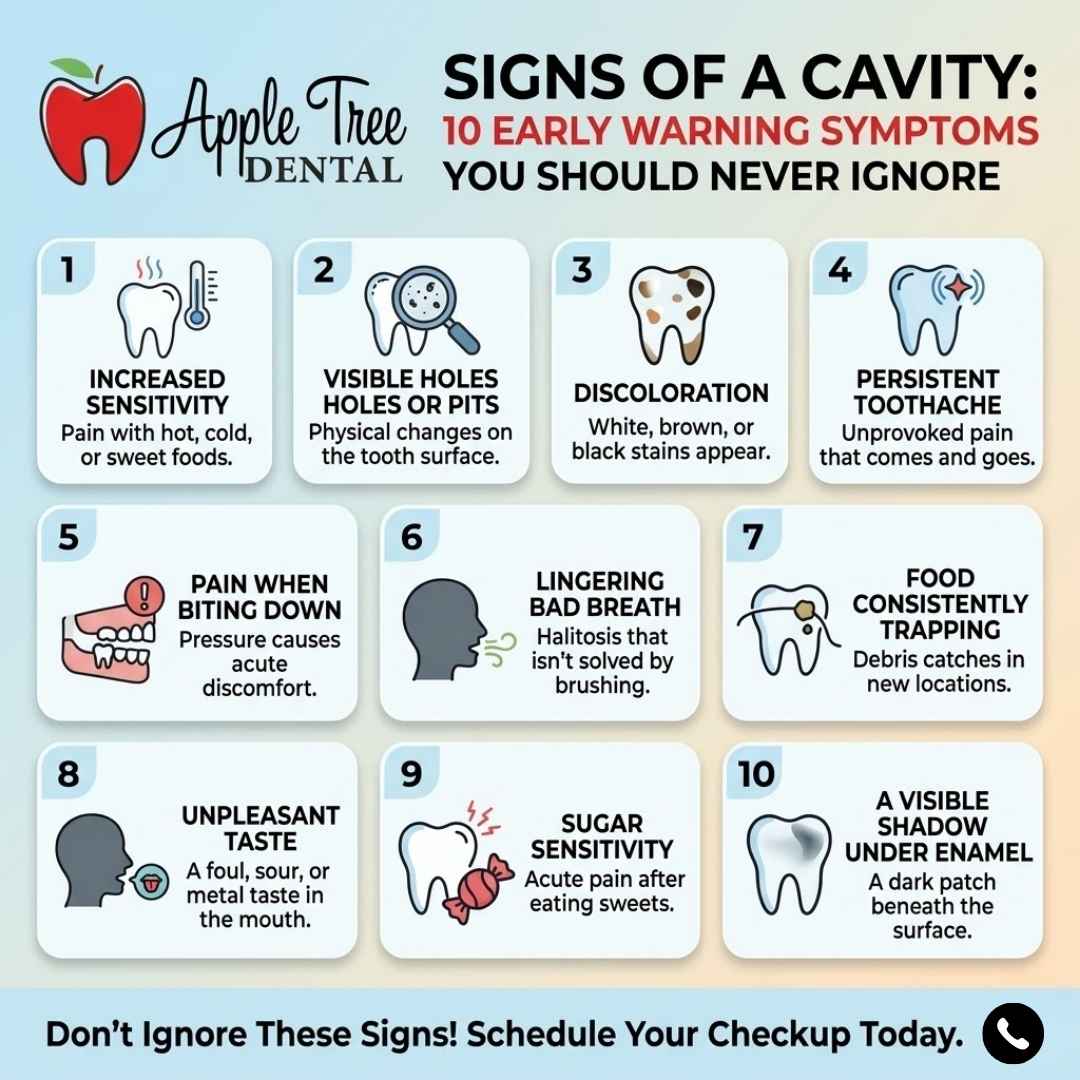
1. Tooth Sensitivity
Discomfort when consuming hot, cold, or sweet foods is often the first warning signal. It indicates that enamel has thinned enough to leave the underlying dentin exposed to temperature and sugar stimuli.
2. Pain When Chewing
Pressure or pain when biting down suggests decay has structurally weakened the affected tooth. In some cases, a hairline crack caused by decay may also contribute to this sensation.
3. Persistent Toothache
A recurring or constant ache — even one that comes and goes — is one of the most recognized signs of a cavity and should never be left without evaluation. Spontaneous pain with no obvious trigger may indicate decay has reached the pulp.
4. Visible Holes in the Tooth
Small pits or holes visible on the tooth surface indicate the cavity has advanced past the enamel layer. At this stage, a dental filling or crown is typically required to restore the tooth structure.
5. Dark Spots or Discoloration
Cavities frequently present as brown, black, or gray spots on the tooth surface. Not all discoloration is decay — a dentist can confirm the difference during a clinical examination and X-ray review.
6. Bad Breath That Won’t Clear Up
The bacteria responsible for tooth decay produce sulfur compounds that cause persistent bad breath, even after consistent brushing and flossing. If bad breath does not resolve with regular oral hygiene, a cavity or early gum disease may be the underlying cause.
7. A Lingering Bad Taste
A localized unpleasant taste in one area of the mouth can occur when food debris and bacteria accumulate inside a decayed area of the tooth. This is typically more noticeable after meals.
8. Food Repeatedly Getting Stuck
If food catches in the same spot between teeth at every meal, early structural decay may be creating a pocket or gap where food becomes trapped. This is worth mentioning to your dentist at your next professional teeth cleaning appointment.
9. Swollen Gums Around One Tooth
Localized swelling or tenderness in the gum tissue around a single tooth can signal that infection from advanced decay has begun spreading beyond the tooth root. This symptom warrants prompt evaluation.
10. Sensitivity to Sweet Foods
Sharp, brief sensitivity when eating sweets is a very common early indicator. Sugar triggers bacterial acid production, and a tooth with compromised enamel reacts quickly to this stimulus.
10 Early Signs of a Cavity — At a Glance
| Warning Sign | What It May Indicate |
|---|---|
| Tooth sensitivity | Enamel thinning exposing dentin |
| Pain when chewing | Structural weakening of the tooth |
| Persistent toothache | Decay nearing or reaching the pulp |
| Visible holes or pits | Advanced enamel damage |
| Dark spots or discoloration | Active decay on tooth surface |
| Persistent bad breath | Bacterial buildup inside a cavity |
| Lingering bad taste | Debris accumulating in decayed area |
| Food getting stuck | Structural gap created by decay |
| Swollen gums near one tooth | Infection spreading beyond the root |
| Sensitivity to sweets | Compromised enamel reacting to sugar |
How Dentists Diagnose Cavities
Dentists detect cavity tooth decay using visual examinations under magnification, dental probing to identify softened enamel, digital X-rays, and in some clinics, laser cavity detection technology. The Canadian Dental Association recommends a professional checkup every six months for most adults — and more frequently for those with a history of recurring decay or gum disease. If you experience dental anxiety, Apple Tree Dental also offers sedation dentistry to make exams and treatments as comfortable as possible.
How Cavities Are Treated
Treatment depends entirely on how far the decay has progressed. Earlier detection consistently means a simpler and less costly procedure.
Dental Fillings
Small to moderate cavities are restored with tooth-colored composite fillings that rebuild the tooth’s natural shape and function. This is the most common cavity treatment.
Dental Crowns
When decay has damaged a large portion of the tooth structure, a dental crown is placed over the remaining tooth to protect it and restore full chewing function.
Root Canal Treatment
If infection has reached the pulp, a root canal treatment removes the bacteria and infected tissue, seals the canals, and saves the natural tooth from extraction. This procedure is far less uncomfortable than most patients anticipate with modern anaesthetic techniques.
Tooth Extraction and Replacement
Severely damaged teeth that cannot be restored may need to be removed. Dental implants are available as a natural-looking, permanent tooth replacement option for eligible patients.
How to Prevent Cavities
Prevention requires consistent daily habits combined with regular professional care. Health Canada identifies fluoride use and routine dental visits as the most effective evidence-based strategies for reducing tooth decay across all age groups.
- Brush at least twice daily with fluoride toothpaste
- Floss once daily to remove plaque from between teeth
- Limit the frequency of sugary, starchy, and acidic foods and drinks
- Drink fluoridated tap water throughout the day
- Schedule professional teeth cleanings every six months
- Ask your dentist about dental sealants for cavity-prone back teeth
Apple Tree Dental proudly accepts the Canada Dental Care Plan (CDCP) with no additional fees for insured patients — making preventive dental care more accessible for eligible families across London, Ontario.
Frequently Asked Questions
1. What are the first signs of a cavity?
The earliest signs include tooth sensitivity to hot, cold, or sweet foods, white chalky spots on the enamel, and mild discomfort when chewing or biting down.
2. Is cold sensitivity always a sign of a cavity?
Not always, but it is one of the most common early indicators of enamel damage. It can also point to gum recession or a cracked tooth — a dental exam is the safest and most accurate next step.
3. Can a cavity heal without treatment?
No. Once a hole has formed in the enamel, it requires professional treatment. Very early demineralization — before a hole develops — may be partially reversed with consistent fluoride use and improved oral hygiene.
4. Are cavities always painful?
No. Early-stage cavities often cause no pain at all, which is why routine dental checkups are essential for catching decay before symptoms develop.
5. How do I tell the difference between a stain and a cavity?
Surface stains affect tooth color without compromising tooth structure. A cavity involves actual destruction of enamel and deeper tooth layers. A dentist confirms the difference during a clinical exam using probing and X-rays.
6. When should I contact a dentist about a possible cavity?
You should contact a dentist as soon as you notice any sensitivity, pain, discoloration, or visible holes in a tooth. Reach out to the team at Apple Tree Dental if you have any concerns — early evaluation almost always means simpler treatment.
Conclusion
Recognizing the signs of a cavity early is the single most effective way to keep treatment simple and protect your teeth long-term. Symptoms such as tooth sensitivity, dark spots, persistent bad breath, and pain while chewing all point to developing tooth decay that deserves prompt professional evaluation. Early diagnosis almost always means less invasive treatment — a straightforward filling rather than a root canal or extraction.
Maintaining consistent oral hygiene, reducing the frequency of sugary foods and drinks, and attending regular dental visits can significantly reduce your lifetime cavity risk. If you notice any of the warning signs described above, do not wait for the discomfort to worsen. Early action protects your tooth, your wallet, and your overall health.
For patients in London, Ontario and surrounding communities, Apple Tree Dental provides comprehensive dental exams, digital X-rays, and personalized preventive care at two convenient locations. Check our special offers page for current promotions and explore our full range of dental services to find the right care for your needs.
About the Author
This article was written by the dental care team at Apple Tree Dental in London, Ontario. Our experienced dentists and oral health professionals are dedicated to providing patients with accurate, up-to-date information to support informed dental decisions. Apple Tree Dental offers a comprehensive range of services, including family dentistry, cosmetic dentistry, and emergency dental care for patients across London, Ontario, and surrounding communities, including Strathroy, St. Thomas, Aylmer, and Thorndale. Our content is reviewed for accuracy and aligned with guidelines from the Canadian Dental Association and Health Canada’s oral health resources. To learn more or book an appointment, visit our dental health blog or book your appointment online today.